Giselle Hoermann
Let me tell you a little about myself
About Me
I graduated with a Bachelor's of Science in Astro-Computer-Science from Umass Amherst in 2024.
I completed my honors thesis "Exploring GPIES Data with Optimized Processing Methods" with Amherst College under Professor Kate Follette.
I conducted research over a span of three years while in college and worked on three separate research projects,
exploring black holes, exoplanets, and seafloor sediment samples.
Research
Exploring GPIES Data with Optimized Processing Methods (Professor Kate Follette, Amherst College, 2023-2024)
For my honors thesis project, I worked on methods used to help detect planets outside our solar system. Because these planets are extremely faint and difficult to see next to bright stars, special computer techniques are needed to remove excess starlight from telescope images. Currently, astronomers manually adjust the settings used to remove the starlight. I worked on an automated pipeline that helps speed up this process, while also creating better results by detecting the best possible setting combination. I learned to build on existing work and to assess previous approaches and identify areas for improvement or optimization.
Why Is Sagittarius A* quiet? (Professor Daniel Wang, Umass Amherst, 2021-2024)
My research focuses on the supermassive black hole Sagittarius A* (SgrA*) in the center of our galaxy. Quiet, or in scientific terms, quiescent black holes take in very little mass. Most supermassive black holes are considered quiescent, but we have limited understanding as to why this is so. Since SgrA* is the closest supermassive black hole, it presents the perfect candidate for answering questions such as our own.
This project taught me problems solving and to be very detail oriented. I also learned to think outside the box when a problem seems insurmountable.
Exoplanets to Microbes (Professor Kate Follette, Amherst College, 2023)
With this project, I was introduced to the biological side of Astronomy. The Boston University Biology lab collaborated with our team of astronomy researchers to develop a pipeline that eases and automates the process of detecting microbes in sediment samples. We worked directly with seafloor samples and learned about fluorescent dyes used in microscopy and how to differentiate between microbes and mineral grains.
During this internship, I learned how to collaborate effectively both with fellow astronomers and across disciplines. I also developed the ability to translate complex technical language into terms that are more broadly understandable.
Professional Experience
Technical Manager (2025-2026)
- - Developed and managed technical systems and data for the bridal store, strengthening my technical management skills and teaching me judgment and discretion
- - Worked directly with clients and staff to resolve issues and support store operations, developing strong communication, interpersonal, and organizational skills
Amherst College, Five College Astronomy Department (FCAD) Internship (Summer 2023)
- - Reviewed an astronomy research paper for publication, providing feedback on clarity, organization, and readability to help communicate complex scientific concepts more effectively
- - Learned about microbial imaging and analyzed cell images
- - Developed a Python image-processing algorithm for cell analysis while collaborating with biologists, strengthening my programming and cross-disciplinary communication skills
Lee SIP Internship (Summer 2022)
- - Independently taught myself Unix, Linux, and Bash scripting to develop a program that corrected alignment and positioning errors in space telescope observations
- - Presented complex research findings to an academic audience, strengthening my scientific communication and public speaking skills
Technical Skills
- Python
- Java
- Unix/Linux Scripting
- C
- Bash
- Machine Learning
- Data Visualization
- Network Protocols
- Ciao Programming
- Blender
- Quantitative Analysis
- Microsoft Office
- Html/JavaScript/Css
- GUI
- MATLAB
Interests
I spend the majority of my free time by either volunteering or
developing my non-professional skills such as baking, playing the piano, golfing, and drawing.
Some of the organizations I have volunteered with include CASA, the Massachusetts Horticultural Society, and the Community Table and Food Pantry at my local church.
Through these experiences, I had the opportunity to work with people from a wide range of backgrounds, which helped strengthen my interpersonal and communication skills.
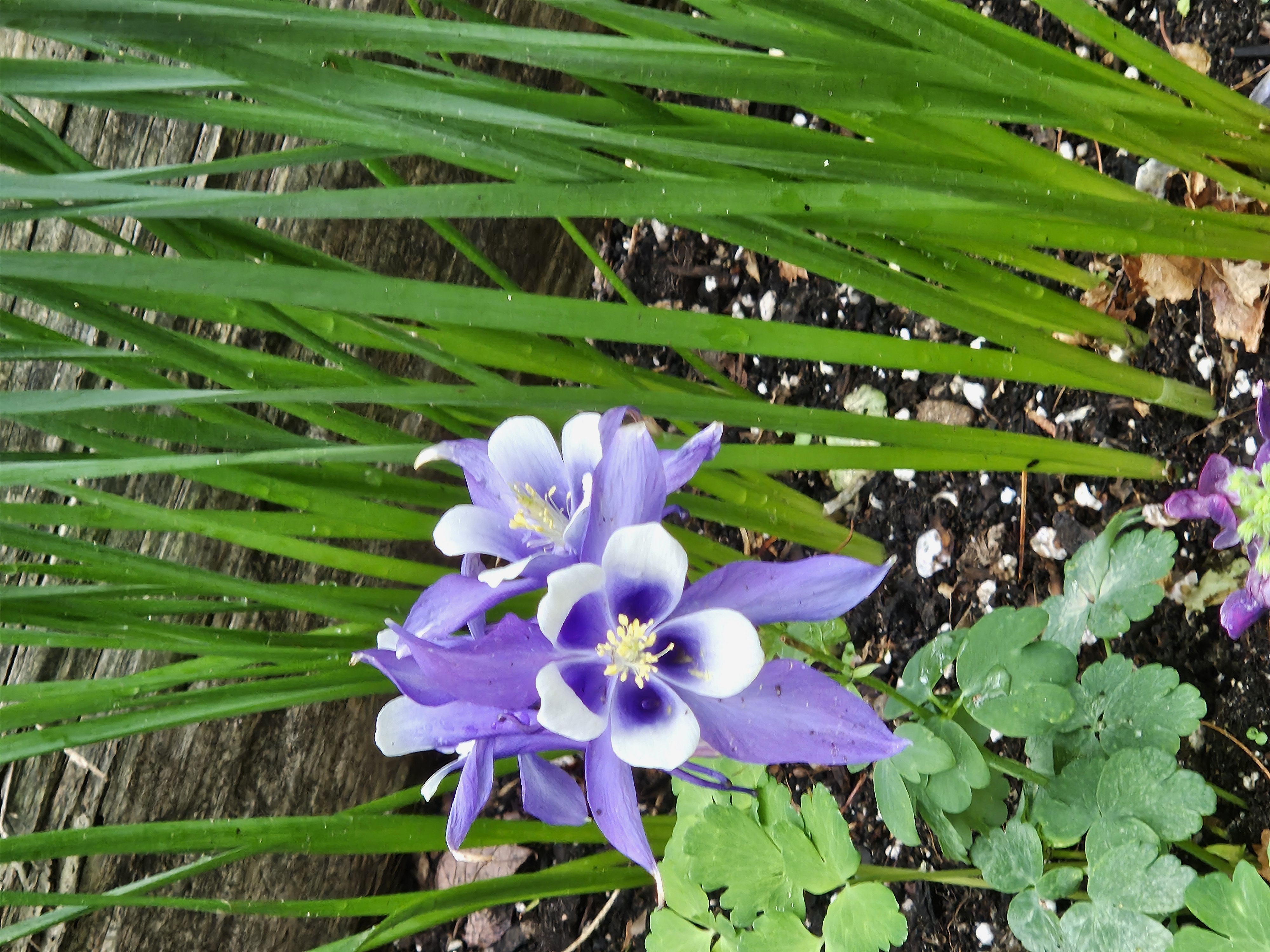
The flower in the photo is a Colorado Blue Columbine. When I saw it at the Horticulture Garden, I felt compelled to capture it.
I hope it brightens your day as it did mine.